SUBMISSIONS OPEN: DECEMBER 1ST – DECEMBER 27TH
"Turning and turning in the widening gyre
The falcon cannot hear the falconer;
Things fall apart; the centre cannot hold"
- The Second Coming, W. B. Yeats.
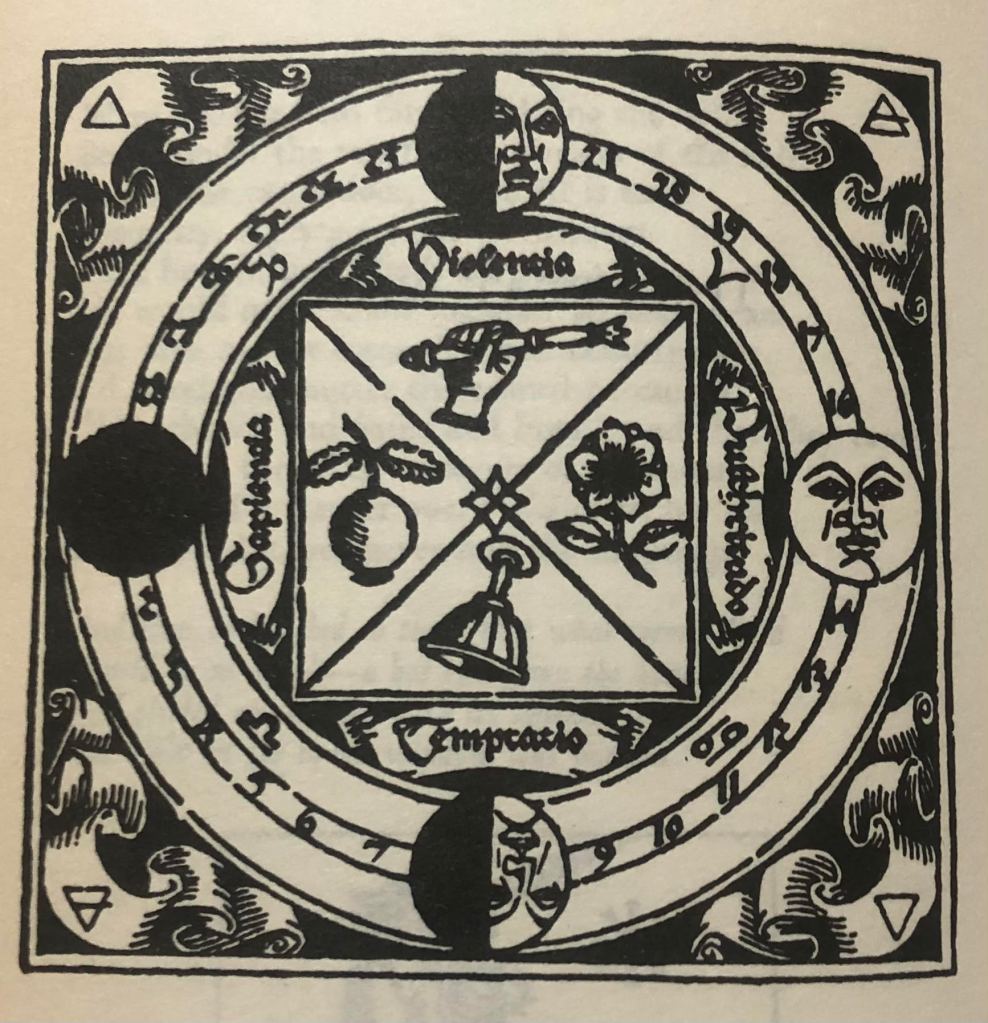
‘The Great Wheel’ from A Vision, W. B. Yeats.
As the year bounds towards its inevitable conclusion, it becomes difficult to think of much else than the ever-present power of endings. Although the idea itself is not unfamiliar, it becomes inescapable in the Winter – a season inextricably linked with the necessity of death. This is the principle upon which our reality is built, our existence finding its vital foundations in the eternal cycle of destruction and rebirth. This is the relentlessly turning wheel which defines our natural lives; the ancient ouroboros which infinitely eats itself. But it’s also complete fantasy, and in the depths of this final season we can’t help but dream of the Spring like some kind of second coming.
In A Vision, Yeats makes sense of the presence of these forces in our individual lives through the image of ‘The Great Wheel’. In this symbol, the dialectical oppositions of life and death are superimposed onto the 28 phases of the lunar calendar, aligning each stage of our existence with a juncture of the moon.
Firstly, the new moon represents an intermundium before life where the individual exists in “complete plasticity” before they advance to phase 2 as a tabula rasa desperate for experience. Consequently, the first quarter moon represents the “struggle to find personality” which quickly turns into resentment towards all that restricts self-expression in phase 12. But, the very nature of the wheel means it is in constant flux and by the third quarter moon, the individual has become tired. Once again we become lost in the labyrinths of ourselves, phase 22 representing the individual’s “last attempt to impose its personality upon the world”.
And by the time we reach phase 28, another ending is upon us. The moon turns its face to us resentfully, lost in the vastness of the night sky. We accept our destiny: finding and losing ourselves over and over, surrendering to the opposing forces that control our lives as they struggle for domination.
But isn’t the ending right where we begin? Yes, the happiness is always temporary, fleeting and rarely satisfactory – but so is the pain. All must remain in balance, must eventually pass, “the centre cannot hold” forever. The spiral must constrict and grow, the tide must ebb and flow; like the seasons, like love, like our invaluable lives. Yes, we must capitulate to the laws of the wheel but there is always chance to evolve, like the “widening gyre”, turning and turning. In the blinking eyes of an ending, what will be your Spring? Where do you find yourself in the ever-changing ‘Great Wheel’?

 The Café Society
Leave a comment